Kling Image 4.0: Native 8K AI Images for Business Marketing

Amir Farid
7 min read
Kling Image 4.0: Native 8K AI Images for Business Marketing
Kling Image 4.0 is a new AI image model, launched on 17 November 2026, that generates images at native 8K resolution, renders up to 2,000 characters of legible text in a single image, and produces up to 10 cohesive images from one prompt. For a business, that means product photography, ad creative and e-commerce pages briefed once, returned as a coherent set. Pricing was not disclosed, and no licence restrictions were stated.
Below: what it does, where 8K helps, and how it compares with MiniMax H3-Image. All capability claims are Kling's own, from the Kling Image 4.0 launch release, unless stated otherwise.
What Kling Image 4.0 actually is
Kling Image 4.0 follows Kling 4.0, the company's video model, and is aimed at commercial visual work: advertising, product pages, brand visuals and storyboards. The Artificial Analysis leaderboard cited in the release puts Kling Image 4.0 Preview first in text-to-image and image editing, and third in UIUX Design scenarios.
Native 8K, a first for AI image generation
Kling says Image 4.0 is the first AI image generator to support native 8K resolution. Detail is generated at 8K rather than upscaled, so it stays sharp in close-ups and under heavy cropping. The release positions this for large-format displays and outdoor advertising.
Pricing: not disclosed yet
No pricing was disclosed. Do not budget on a per-image price until Kling publishes one, unlike MiniMax H3-Image, whose launch offer priced a 4K image at roughly 3 cents.
Why 8K matters for business marketing
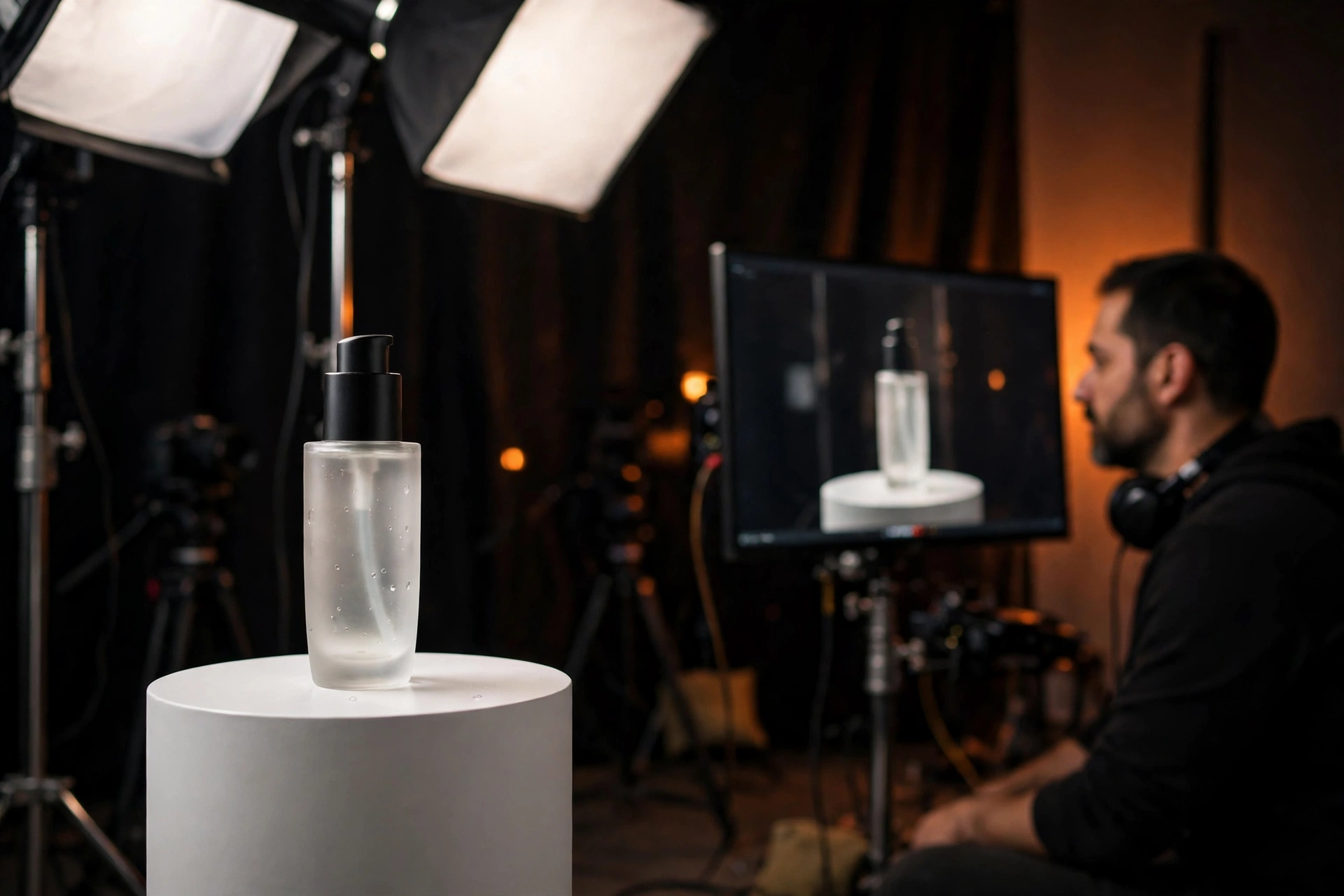
Most marketing images never need 8K. It earns its keep in three places: large-format display, heavy cropping, and reuse across formats from one master image.
Large-format displays and outdoor advertising
A billboard, a retail window or an exhibition stand magnifies every flaw. Kling's pitch is that native 8K holds up at those sizes. If you run outdoor or in-store advertising, test that use case first.
Crop once, use everywhere
One 8K master can be cropped into a hero image, a square social crop, a vertical story and a wide banner without quality falling off a cliff. One master that survives cropping saves real time and keeps the product identical everywhere.
Photographic realism that holds up in a group shot
Kling claims photographic realism with soft lighting, lifelike textures and fine detail. The claim that matters most is group portraits: varied facial features, body types, ages and poses, so a group shot does not look like the same person cloned five times.
A lifestyle image, a team photo or a group scene in a recruitment ad all need to look like real people, so test the hardest case: five or six people in one frame, hands and faces visible.
Text rendering: up to 2,000 characters in one image
Text has long been AI image generation's weak point. Kling says Image 4.0 renders up to 2,000 characters of legible text in one image, with expressive layouts, editable text and fonts, 70+ preset fonts, and font-reference upload to match a brand's own typeface.
What 2,000 characters unlocks
Two thousand characters is a paragraph, not a headline: enough for a poster, a product label, a menu board, or an infographic with real copy. Text and images sit on separate layers, so fixing wording does not mean regenerating the image. Check every character before publishing. Brand-true output is also the central question in our ChatGPT Images 2.6 guide for business.
Multilingual text, including Chinese, Japanese and Korean
Kling says the model handles text in English, Japanese, Korean, Spanish, Portuguese, and simplified and traditional Chinese, which matters for businesses selling into East Asian markets, where earlier models often mangled CJK characters. Test each language you use with a native speaker.
Ten cohesive images from a single prompt
The most useful feature may be the least flashy: up to 10 cohesive images from one prompt, consistent in style and subject identity, varying in framing and angles. Kling says the model plans shots and narrative flow for storyboards, product angles and presentation layouts.
Storyboards, product angles and presentations
A launch needs a hero shot, three or four angles, a lifestyle scene, a detail close-up and a comparison frame, all in the same style with the same product. Until now that meant generating each image separately. One prompt returning a planned set changes the unit of work from one image to one campaign.
Long-form e-commerce pages and brand visuals
Kling also says Image 4.0 supports long-form e-commerce product pages and brand website visuals, with text and images on separate layers. A long product page is a sequence: hero, features, detail shots, lifestyle, comparison, specifications. Generating that as one coherent set, then editing the copy layer, is the workflow it is built for. It connects to our AI agents for e-commerce guide and to Shopify's agentic commerce connectors. The same set can feed a WhatsApp storefront, where the product image is often the whole sales pitch (see our WhatsApp chatbot cost guide).
Kling Image 4.0 vs MiniMax H3-Image
These are the two image models UK businesses are most likely to compare this month: they differ on resolution, on images per prompt, and, most importantly, on licence.
| Factor | Kling Image 4.0 | MiniMax H3-Image |
|---|---|---|
| Resolution | Native 8K, per Kling | Native 4K, about 16 MP |
| Images per prompt | Up to 10 cohesive images | One image per generation |
| Text rendering | Up to 2,000 characters, 70+ fonts | Weak on diacritics |
| Price | Not disclosed | $0.034 per 4K image, launch offer |
| Licence for UK use | No restrictions stated | Licence excludes US, EU, UK, South Korea for self-hosting |
Which one should you pick
For a coherent campaign or product-page set, Kling's 10-image sets and 8K output are the stronger fit, with no licence restriction stated in its launch release. If you need a known per-image price today, MiniMax's launch offer is the cheaper, more certain option, but read our MiniMax H3-Image licence guide before self-hosting anything. Test both on the same five products and compare at publish size. Test new models the same way; see our Meituan LongCat-2.5 guide.
The practical workflow: brief once, get a coherent set
The workflow is simple: one detailed brief, one coherent set back, edit the text layer, publish. That replaces generating, checking and regenerating one image at a time. The same brief-once logic applies to motion too — see our guide to Gemini Omni 1.2 Flash AI video.
- Brief like a creative director: product, setting, lighting, mood, audience, exact text. Vague prompts produce vague sets.
- Judge the weakest image: a set is only as good as its worst frame.
- Check text character by character, in every language you publish in.
- Keep the masters and prompts, so next season's campaign starts from a known-good brief.
What still needs a human
None of this removes the human. Someone still has to decide what the brand looks like, check the product, catch a wrong price, and take responsibility for what goes out. Treat AI image generation as a junior designer with infinite stamina. If you want the whole pipeline wired up, our custom software development cost guide for the UK explains what it typically costs, and hiring an AI development company in London covers what to ask. Coherent image sets also matter for app visuals and for conversation; see our Flutter vs React Native comparison, mobile app maintenance cost guide, AI chatbot vs AI agent guide and how to build an AI voice agent. If you would rather have Coheser build the pipeline for you, see our services.
Frequently asked questions
What is Kling Image 4.0?
An AI image generation model launched on 17 November 2026, following Kling 4.0, the company's video model. Kling says it generates native 8K images, renders up to 2,000 characters of text, and produces up to 10 cohesive images from one prompt.
How much does Kling Image 4.0 cost?
Not disclosed in the launch announcement; do not budget on a per-image price until Kling publishes one.
Can a UK business use Kling Image 4.0?
No licence restrictions were stated in the launch release, unlike MiniMax H3-Image, whose community licence excludes the UK, US, EU and South Korea from self-hosting the weights. Read Kling's current terms before building a commercial workflow on it.
Can it replace a product photo shoot?
For the long tail of angles, variants and seasonal scenes, it can cut studio days. For a flagship hero image, a real photograph is still safer. Check every image for accuracy, brand consistency and correct text.