Google Genie 4: Real-Time AI Worlds Explained for Business

Amir Farid
7 min read
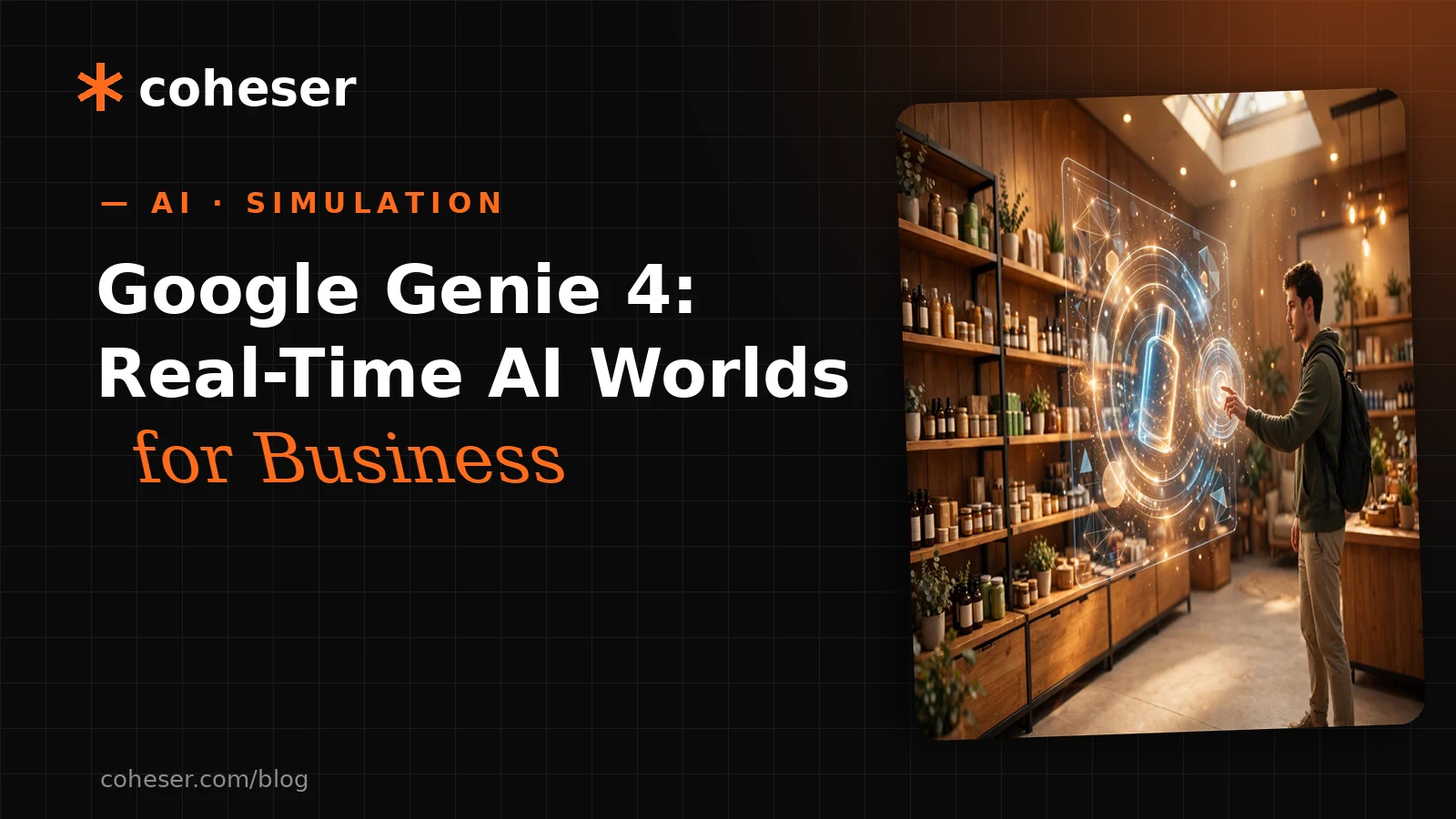
Google Genie 4, announced by Google DeepMind on 27 October 2026, is a real-time AI world model: instead of a fixed video clip, it creates an interactive world you can steer as it runs — change the weather, move the camera, add a person or an object, by prompt or keyboard. For businesses, that means product demos, training simulators and virtual showrooms customers and staff can explore, not just watch.
The catch: Genie 4 is in research preview with trusted testers, coming soon to Google AI Ultra subscribers in Project Genie and to early-access partners via the Gemini API and Google AI Studio, with a waitlist. No public API pricing has been published — prepare for it now, but you cannot buy and deploy it today.
Google Genie 4: Real-Time AI Worlds Explained for Business
What Google Genie 4 actually is
A world model simulates an environment rather than describing one. Genie 4 generates a coherent, explorable scene in real time, with visuals, sound and interaction. It is natively multimodal: music, ambient noise and dialogue are generated together with the world, not added afterwards, so what you see, hear and do stay in sync.
The two Gemini models inside Genie 4
Gemini Omni anchors the world's appearance and behaviour in the real world, so objects and characters look and act plausibly, while Gemini 3.8 Flash acts as the guiding agent in the loop, keeping the simulation responsive. One model keeps the world believable; the other keeps it interactive — a pattern familiar to businesses using AI agents for multi-step tasks.
Unlike ordinary AI video — a clip you watch from start to finish — Genie 4 keeps running while you steer it, a step beyond the chatbots most businesses use today, which respond in words rather than in worlds.
How real-time steering works
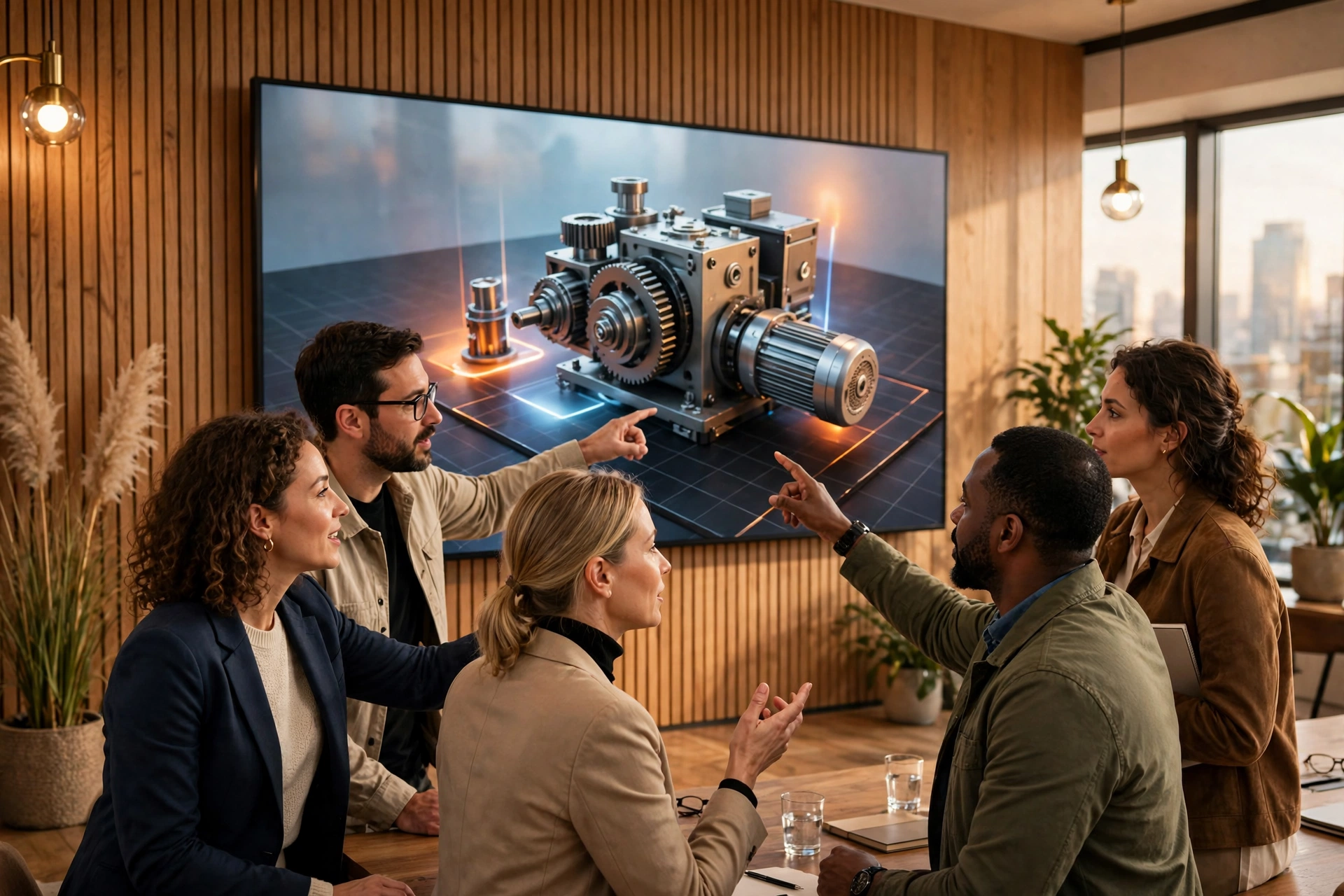
Steering happens two ways: prompt mid-simulation — change the weather, move the camera, add a person or an object — or use keyboard controls to move through the scene. The user is inside the loop, so the simulation becomes a tool for trying things, not a demonstration to observe.
How long a coherent scene lasts
Coherent scenes have been reported by TechCrunch and The Verge at about two minutes, roughly double Genie 3's one minute. That is reported coverage, not an official specification — and two minutes still suits a product demo, training drill or guided walkthrough.
What businesses can actually do with interactive worlds
The strongest uses are where exploring beats watching. Five stand out.
Retail product demos customers can explore
A furniture retailer could let a customer walk around a virtual room, change finishes and lighting, and inspect a product from every angle before buying. That extends ecommerce development: the product page becomes a place to try things, not just read.
Training simulators without the real-world risk
Staff can practise handling a difficult customer, operating equipment or responding to a safety incident where mistakes cost nothing. That is the logic of AI automation: automate the repeatable, train the risky. But a drifting world must never be the sole source of truth for safety-critical training; real trainers must check what it teaches.
Property tours and virtual showrooms
Developers could offer walkthroughs where buyers change the time of day, swap furnishings or view a space from their own perspective, without a site visit — a genuine advantage for off-plan sales. Buyers in the United Kingdom, the UAE and Saudi Arabia often cannot visit in person, and an interactive tour beats a photo gallery — provided layouts are verified.
Logistics and robot training environments
DeepMind points to training environments for robots and agents as an intended use, and logistics is the obvious case. A warehouse robot can practise navigating aisles in thousands of simulated layouts before touching a real floor — cheaper and safer than learning in a live warehouse. Companies exploring AI automation for logistics companies should watch this closely.
Marketing experiences people remember
A car brand could let customers test-drive a virtual model; a hotel could let guests explore a resort. But it must lead somewhere — a booking, sale or sign-up — or it is an expensive novelty. Pair it with a clear call to action, such as the AI calling agent for callbacks.
What is NOT ready yet
DeepMind is clear about Genie 4's limits. Details and object permanence can drift: an object may change or vanish as the simulation continues. Audio accuracy, text legibility and spatial accuracy all have limits too, so signs may be unreadable, sounds may be wrong, and layouts may not match reality. For a training simulator, property tour or product specification, they are deal-breakers unless a human verifies the output.
Availability and pricing — the honest picture
Genie 4 is not generally available. It is in research preview with trusted testers, coming soon to Google AI Ultra subscribers in Project Genie and to early-access partners via the Gemini API and Google AI Studio, with a waitlist. No public API pricing has been published — any figure quoted is speculation, not a published price. Businesses in Pakistan and the USA should confirm regional access before promising clients a Genie 4 feature. All generated video and audio carries SynthID, Google's watermarking for AI-generated media.
What to build now while waiting for access
Waiting for Genie 4 is not a strategy; building the conventional version now is. Build the demo, booking flow and follow-up system now, so the world model slots into a working funnel instead of replacing a missing one.
Build the demo, agent and funnel first
Start with a conventional interactive demo — a 3D product viewer or configurator — backed by an agent that answers questions and captures leads. Our guides on chatbots versus AI agents, how to build an AI voice agent and retrieval-augmented chatbots cover the agent side, while Flutter app development can carry the demo onto mobile. A CRM underneath captures every interaction, so when a world model arrives you already know which demos convert — a pattern hospitality businesses can apply inside restaurant ERP.
A practical preparation checklist
- Join the waitlist; confirm the best route — Project Genie, Gemini API or Google AI Studio.
- Pick one use case with a measurable outcome, such as demo-to-booking conversion.
- Build the conventional demo and funnel now, and record its baseline conversion.
- Set accuracy checks a world-model version must pass: verified layouts, readable text, human sign-off.
- Budget honestly: until pricing is published, treat any Genie 4 cost as an estimate, not a fixed figure.
The businesses that benefit first will have a demo, funnel and measured baseline already in place — able to tell within weeks whether the world sells more or converts faster. That preparation is available today through newer automation models, grounded in custom software development discipline rather than hype. Full details are in Google DeepMind's Genie 4 announcement.
Frequently asked questions
What is Google Genie 4?
Google Genie 4 is a real-time AI world model announced by Google DeepMind on 27 October 2026. It generates an interactive world — visuals, music, ambient noise and dialogue together — that users steer in real time, rather than watching a fixed clip.
When can my business use Google Genie 4?
Not yet, in general. Genie 4 is in research preview with trusted testers, coming soon to Google AI Ultra subscribers in Project Genie and to early-access partners via the Gemini API and Google AI Studio, with a waitlist. Join it and build the conventional demo and funnel meanwhile.
How much does Google Genie 4 cost?
No public API pricing has been published for Genie 4. Any price quoted elsewhere is speculation, not a published rate — treat any Genie 4 business case as an estimate until Google publishes pricing.
How long can a Genie 4 scene stay coherent?
TechCrunch and The Verge have reported coherent scenes of about two minutes, roughly double Genie 3's one minute. That is reported coverage, not an official specification, and DeepMind notes that details and object permanence can drift.
What should my business build now instead?
Build the conventional version: an interactive demo or configurator, an AI agent to answer questions and capture leads, and a CRM-backed funnel with a measured baseline. When Genie 4 arrives, it can upgrade a working funnel — and you can prove whether it performs better.