Anthropic Claude Ship: AI Agents That Review, Fix and Approve Your Pull Requests

Amir Farid
7 min read

Anthropic Claude Ship: AI Agents That Review, Fix and Approve Your Pull Requests
Anthropic launched Claude Ship on 23 November 2026, in beta. It takes a GitHub pull request through review, fixes and an approval decision, so developers can open a PR and get back to building. It bundles three agents — Code Review, already generally available, plus two new beta agents, PR Steward and Claude Approvals — and it works on Claude Team and Enterprise plans for GitHub repositories. The short version: routine pull requests get cleared faster, and senior engineers only see the changes that actually need human judgement.
The bottleneck is no longer writing code — it is the review queue every line waits in. Claude Ship automates the steps after the pull request opens, under rules the team writes itself.
What Claude Ship actually is
Claude Ship is three agents working a pull request in sequence: Code Review flags problems against the whole codebase, PR Steward fixes failing checks, merge conflicts and review feedback, and Claude Approvals approves the routine changes or sends the risky ones to a person. Each agent switches on separately, one repo at a time.
Anthropic recommends starting approvals in observe-only mode, and is upfront that the system may miss bugs or security issues.
The three agents, one at a time
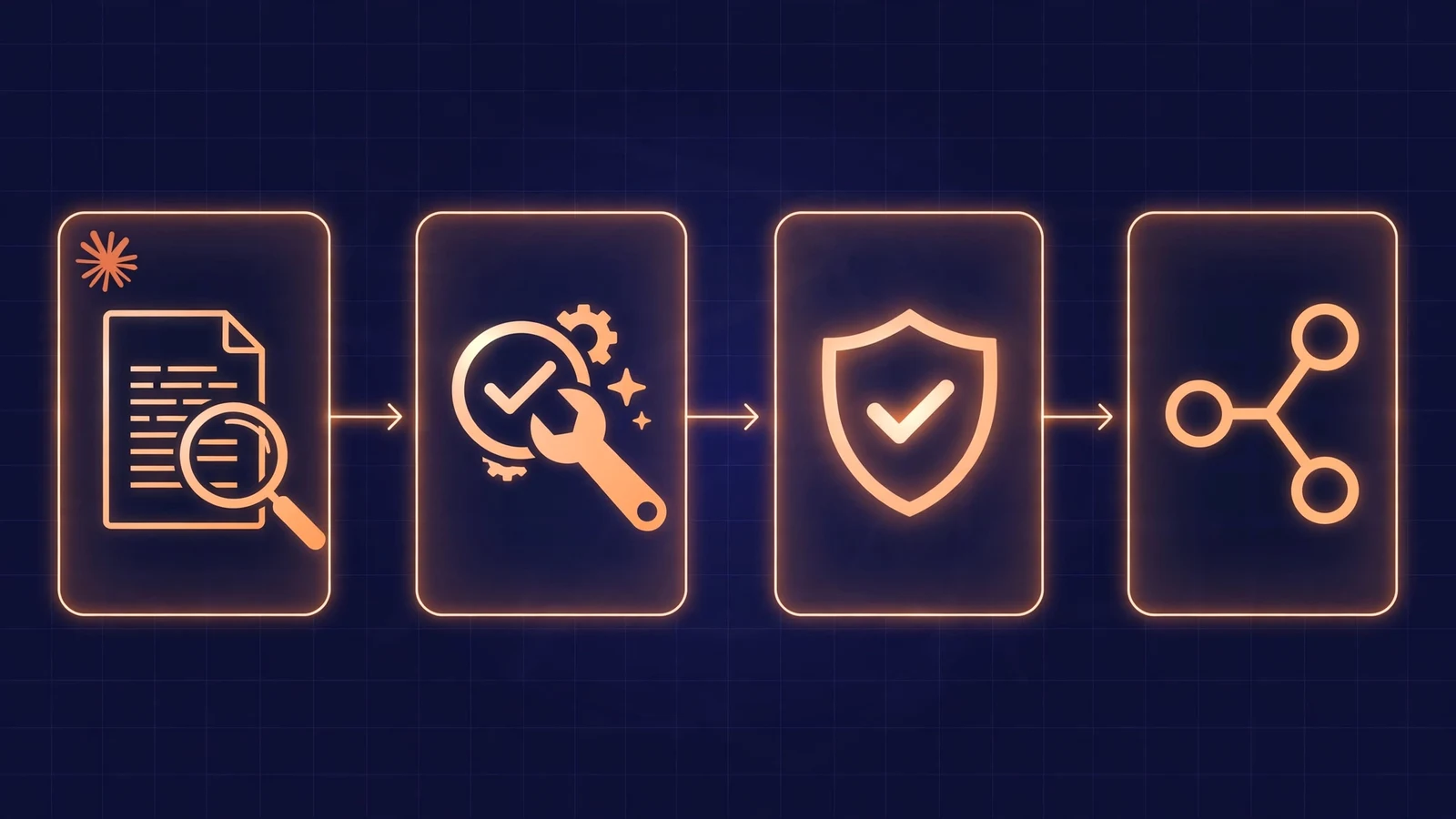
Code Review: the reviewer that reads everything
Code Review is the oldest of the three and the only one generally available. It checks a PR against the codebase, verifies its findings, and leaves inline comments. Teams pick a review level per repository — Quick, Standard or Deep. Its advantage is consistency: it reads everything, every time.
PR Steward: the fixer that keeps the PR green
PR Steward, new and in beta, does the unglamorous work after a review: failing CI checks, merge conflicts and review feedback. It cannot approve or merge, and after every push it comments with what it changed and how to undo it. Developers can steer it with an @claude comment, or stop it with @claude stop.
Claude Approvals: the one that decides
Claude Approvals, also new and in beta, is the agent people will argue about. It applies a policy file the team writes in the repo — Anthropic calls it a smarter CODEOWNERS file — using signals such as Code Review findings. Routine changes are approved on their own; anything riskier goes to a human. The policy file lives in the repo, in the open.
The /ship command: try it on your own pull requests
For individuals, there is a simpler way in: the new /ship command in Claude Code. Run /ship and Claude pushes the change, opens the PR, reviews it, and works on feedback and failing checks. Rolling out in Claude Code and the desktop app from 23 November; any paid plan can try it on their own PRs.
Start there. Our coverage of Claude Fable 5.2 makes the same point — pilot on a real job, judge it on your own tests.
What it costs — and the credits on offer
Claude Ship is billed on tokens, through the organisation's usage credits, separately from the plan's included usage. Cost depends on PR volume and size, review level, and PR Steward's workload. Admins can set monthly spend limits — set the cap on day one, because an agent reviewing every push on a busy repo can run up a bill quietly.
Approvals has no base charge, though policy classifiers are billed per token, and a policy that triggers a review still bills for it, even in observe mode. Eligible Claude Enterprise organisations can claim at least $10,000 in Claude Ship credits, to use within 30 days of claiming, with claims open until 15 January 2027. Our AI agent development cost guide for the UK and custom software cost guide make the same point: tooling is the small number; engineering time is the big one.
Where the risks sit
Claude Ship is useful, and it punishes a careless rollout.
Approvals are the risk, not reviews
A bad review comment is harmless; a bad approval ships code. Start by approving only the most boring changes — dependency bumps, documentation, formatting, test-only changes — and expand the list only when the log shows the agent deciding the way your team would. Keep payments, auth, permissions and migrations human-only for months.
AI review can miss things — Anthropic says so
Anthropic states plainly that Claude Ship may miss bugs or security vulnerabilities. Keep human review mandatory for sensitive code, and your test suite as the real gate. See our coverage of Anthropic's November usage-policy change for the rules that keep moving.
Not every organisation can use it
Claude Ship is unavailable to organisations with Zero Data Retention, the HIPAA configuration, or customer-managed encryption keys, and it works with GitHub repositories only. If your team is on GitLab, Bitbucket or self-hosted code, this launch changes nothing today.
How to roll it out safely
- One repository first. Pick a low-risk repo with good tests, turn on Code Review alone, and set a spend limit first.
- Add PR Steward second. Let it fix failing checks for a few weeks. Are its comments clear and the rollbacks easy?
- Write the approval policy with your senior engineers. List exactly which changes may be auto-approved, with "send it to a human" as the default.
- Run approvals in observe-only mode. Watch the decisions for a few weeks, then make the approval a required check in branch protection.
- Measure the result. Track turnaround time and whether anything approved later had to be reverted. Anthropic's own claim: on its Claude Code team, merged PRs more than doubled from June to September while reverts fell 40%+ — its own figure, not independently verified.
One narrow pilot, measured properly, beats a company-wide launch — the same discipline behind our AI agents development, AI automation and n8n automation work.
What this means for software teams and businesses
For a software team, Claude Ship attacks the right bottleneck. Writing code got fast first; review, fixing and approval are where the queue forms now. Clearing the routine half gives senior engineers their afternoons back for architecture and the hard reviews.
For a business buying software, faster reviews mean shorter lead times — and a new question for any development partner: who approved this change, a person or a policy? A good answer names the covered changes, the observe-mode period, and the revert rate. Our guide to hiring AI developers in Pakistan and guide to scaling a SaaS MVP without rebuilding apply the same test: inspectable process beats promises.
The wider picture: coding agents are moving from writing code to owning the delivery loop — see Anthropic's Claude Duet, our coverage of Cognition's SWE-2 Flash and GitHub Copilot's cloud automations, and our GDPx benchmark coverage and LongCat-2.5 coverage. The agents are deciding when code is ready now. Keep a human in charge of that decision.
For help with review policies, agent pilots or a custom software build, see how we build custom AI systems or talk to Coheser. For launch details, read Anthropic's own announcement of Claude Ship and the TechCrunch report on the launch.
Frequently asked questions
What is Claude Ship?
Anthropic's three-agent suite for GitHub pull requests, launched in beta on 23 November 2026: Code Review reviews, PR Steward fixes, Claude Approvals approves routine changes under a team-written policy. Available on Claude Team and Enterprise plans.
Can Claude Ship approve pull requests on its own?
Yes, but only what your approval policy allows. Routine changes are approved automatically; anything riskier goes to a human. Run the policy in observe-only mode first; PR Steward cannot approve or merge.
How much does Claude Ship cost?
Billed on tokens, separately from plan usage, with admin-set limits. Approvals has no base charge; policy classifiers are billed per token. Eligible Enterprise organisations can claim at least $10,000 in credits, usable within 30 days, with claims open until 15 January 2027.
Is Claude Ship safe for production code?
It has limits, not guarantees. Anthropic says it may miss bugs and security vulnerabilities, so keep human review mandatory for sensitive code and your test suite as the real gate. Start on one low-risk repo, in observe-only mode.
Does Claude Ship work with GitLab or Bitbucket?
No — not yet. It works with repositories on GitHub only, and it is unavailable to organisations with Zero Data Retention, the HIPAA configuration, or customer-managed encryption keys.