Amazon Lets You Text Alexa to Shop: What It Means for Retailers

Amir Farid
7 min read

Amazon now lets selected customers in the United States shop by texting Alexa. Announced on 6 November 2026, the new option turns Alexa for Shopping into a contact in your phone — it appears as "Alexa Shopping". Send one informal text — "I'm out of dog food, need a birthday gift, and we're low on paper towels" — and the agent searches, compares, suggests and buys. Invitation-only for now, with millions more US customers to follow in the coming weeks. No UK or UAE date yet — but the direction of travel is clear.
What Amazon actually launched
The feature is a new channel for Alexa for Shopping, the AI shopping agent Amazon launched in May 2026 by combining its Rufus shopping chatbot with Alexa+. It already lived in the app, on Amazon.com and on Echo Show; now it also lives in your text messages. Invited customers receive a text, accept the terms, link their phone number and start messaging. Amazon's own announcement sets out the rollout.
A request started over text carries over to the app, the website and Alexa-enabled devices, and back again. Delivery updates arrive in the same thread, so one conversation becomes shopfront, receipt and tracker — the same pattern behind the WhatsApp commerce playbook, only now the conversation is with an agent.
What you can actually do by text
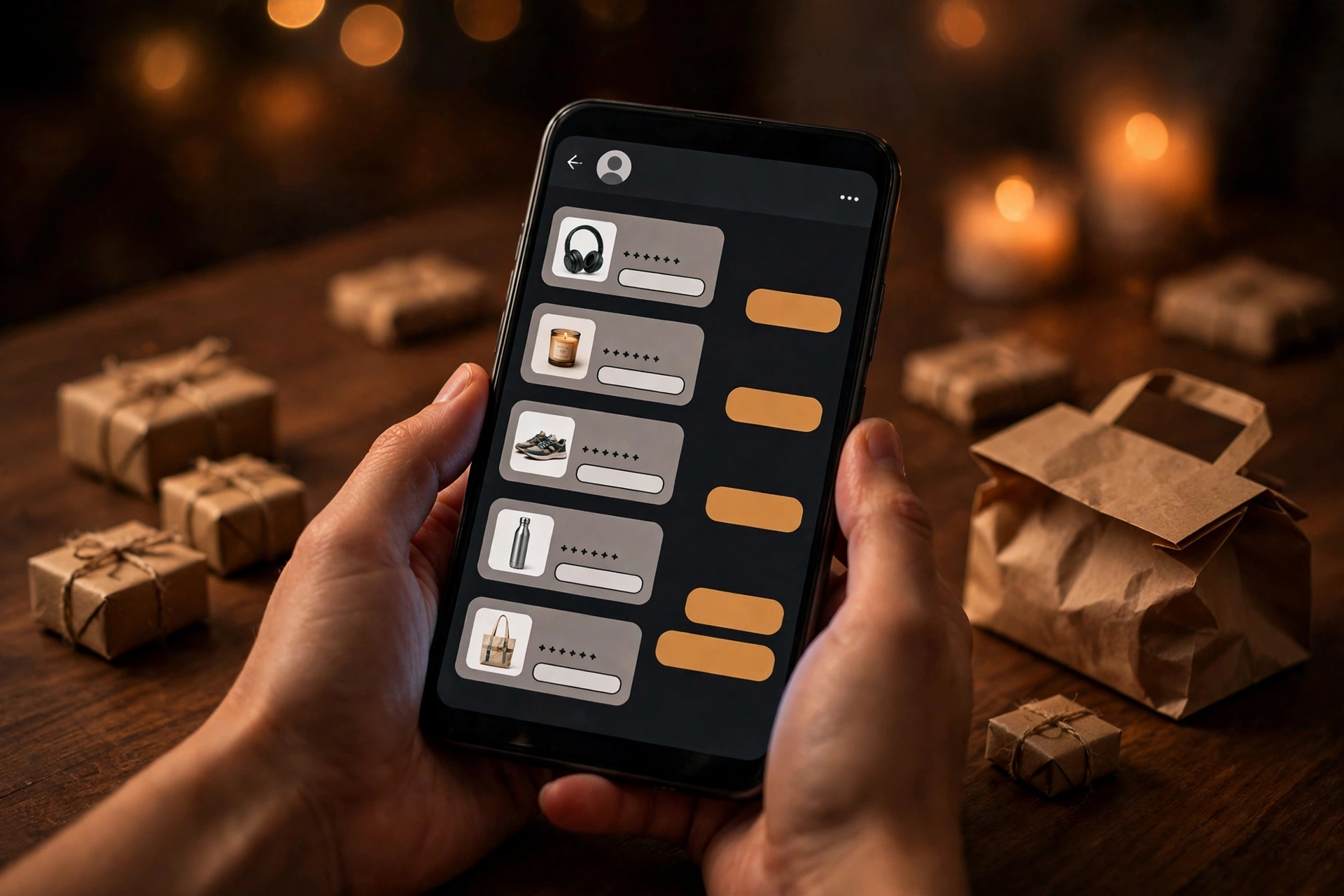
Amazon lists a dozen kinds of request, and they read like the notes people already type to themselves. The agent works in the background, then texts back when the task is done — the difference between answering and acting, as our AI chatbots versus AI agents guide explains.
- Multi-item errands: one message covering dog food, a birthday gift and paper towels.
- Groceries: a weekly order, a recipe photo to add every ingredient, or brunch in 30 minutes.
- Reorders: "reorder the laundry detergent I bought last month" — bought with your approval.
- Photo search: send a photo of an outfit and ask for similar looks.
- Deals and prices: "let me know when AirPods go on sale" sets a watch; auto-buy can purchase at your target price.
- Lists and orders: add to a grocery list, create a holiday gift list, ask "where's my package?" — Shop Direct also surfaces options from stores across the web.
Memory is the real feature
The agent remembers what customers tell it. Tell it you only want vegan products and it remembers; mention you are training for a marathon and it factors that into future recommendations. That memory turns a search box into a personal shopper — and makes it sticky. The same effect drives the always-on agents in Perplexity Teammates and the proactive assistant in Claude Duet.
The numbers Amazon is quoting — and how to read them
Amazon says more than 400 million customers used Alexa for Shopping in the last 12 months, and use of its agentic features has grown more than eightfold since the start of 2026. Those are Amazon's figures, not independently verified, and they describe the established assistant — not the new texting channel, still invitation-only. Even so, the scale is the point: a texting agent reaching hundreds of millions, weeks before Black Friday. Amazon also describes 100+ capabilities. Treat them as a starting point: our GDPx benchmark coverage showed the best agents completing only a small share of long-horizon tasks.
Why Amazon built its own agent — and blocked Muse
In September 2026 Amazon blocked Meta's Muse shopping agent from querying its listings, and TechCrunch's report on the launch notes the texting feature works much like the third-party agents Amazon has kept out. The message is plain: the shopping conversation will happen on Amazon's terms, inside Amazon's thread, with Amazon's agent.
There is also a reality check. DoorDash said last month that third-party agents had placed only a few hundred orders in total on its platform, and it will concentrate on its own text-based agent instead. Agentic commerce is real but early — and the platforms that own the customer relationship are moving to own the agent too — the pattern in our Shopify agentic commerce guide.
What this means for retailers: the shop is now a conversation
For years, e-commerce optimisation meant winning a search results page: rank the product, polish the listing, buy the ad. A texting agent changes the job: the buyer describes a need in one sentence, and the agent picks. Your product now competes to be the answer the agent gives.
Make your catalogue machine-readable
An agent cannot recommend what it cannot understand. Structured product data — accurate titles, complete attributes, sizes, materials, dietary and compatibility flags, clear variants — is now the shelf edge. If your feed says "vegan" in a blog post but not in the product data, the agent that only shows vegan products will never see it. Our AI agents for small business guide and our RAG chatbot guide make the same point: garbage in, confident garbage out. Reviews and ratings are what the agent quotes when it compares products, so thin listings lose.
Price, stock and delivery must be honest in real time
An agent that promises a delivery date or a target-price purchase is only as reliable as the data behind it. Stale stock, slipping delivery estimates, or prices that change between suggestion and checkout show up as broken promises in a thread the customer reads like a conversation with a person. Real-time feeds are no longer a nice-to-have. Our e-commerce development work starts from exactly this, and our e-commerce returns automation guide covers the post-purchase side.
What your business should do now
Start with the channel you already control. Audit your product feed the way an agent would read it: pick ten products, and ask whether a stranger who only had your structured data could answer a customer's texted question about each one. Fix the gaps — missing attributes, vague titles, out-of-date stock — before spending on ads. Then check your fulfilment promises — an agent quotes them verbatim.
If you run your own store, the bigger question is whether your shop can be read by agents at all. On Amazon itself, Sponsored Products will reportedly appear inside these threads, free for now. Shopify has already moved with agent connectors, as we covered in our Shopify agentic commerce post: publish structured product data, keep pricing and stock live, and make checkout possible without a human browsing session. A small automation stack — see our n8n versus Make versus Zapier comparison — can keep those feeds live without a rebuild. If you want that work scoped, Coheser's AI agents and automation team builds exactly these integrations, and our guide to how to build an AI voice agent shows the same pattern applied to phone calls.
Keep the scale in perspective. Text-to-buy is US-only, invitation-only and days old, and third-party agents have not yet produced big order volumes anywhere — DoorDash's few hundred orders are the honest benchmark. But Amazon is the largest US retailer putting its agent into the messaging app weeks before its biggest shopping season. The buying surface is becoming a conversation, and retailers who prepare their data now will be the ones the agent recommends. Talk to Coheser about an e-commerce or AI agent pilot.
Frequently asked questions
What is Amazon text Alexa shopping?
A texting option for Alexa for Shopping, Amazon's AI shopping agent. Selected US customers can text the contact "Alexa Shopping" with natural-language requests — finding products, comparing options, adding to cart and completing purchases — without opening the Amazon app.
Who can use it, and when does it expand?
From 6 November 2026, a small group of invited US customers, with millions more to follow in the coming weeks. There is no announced date for the UK, UAE or other markets.
Can Alexa really buy things by text?
Yes — it searches, compares, messages back suggestions, adds items to the cart and completes the purchase on your behalf. It can also auto-buy when an item hits your target price, and track deliveries in the same thread.
What should retailers do about it?
Make your product data machine-readable: complete attributes, accurate pricing, live stock and honest delivery times. The agent recommends from structured data, reviews and price history — thin listings and stale feeds will simply not be chosen. Talk to Coheser about an e-commerce or AI agent pilot if you need help making your store agent-ready.