DeepSeek's Open-Source Super-Agent: Free Coding Help, With Caveats

Amir Farid
7 min read
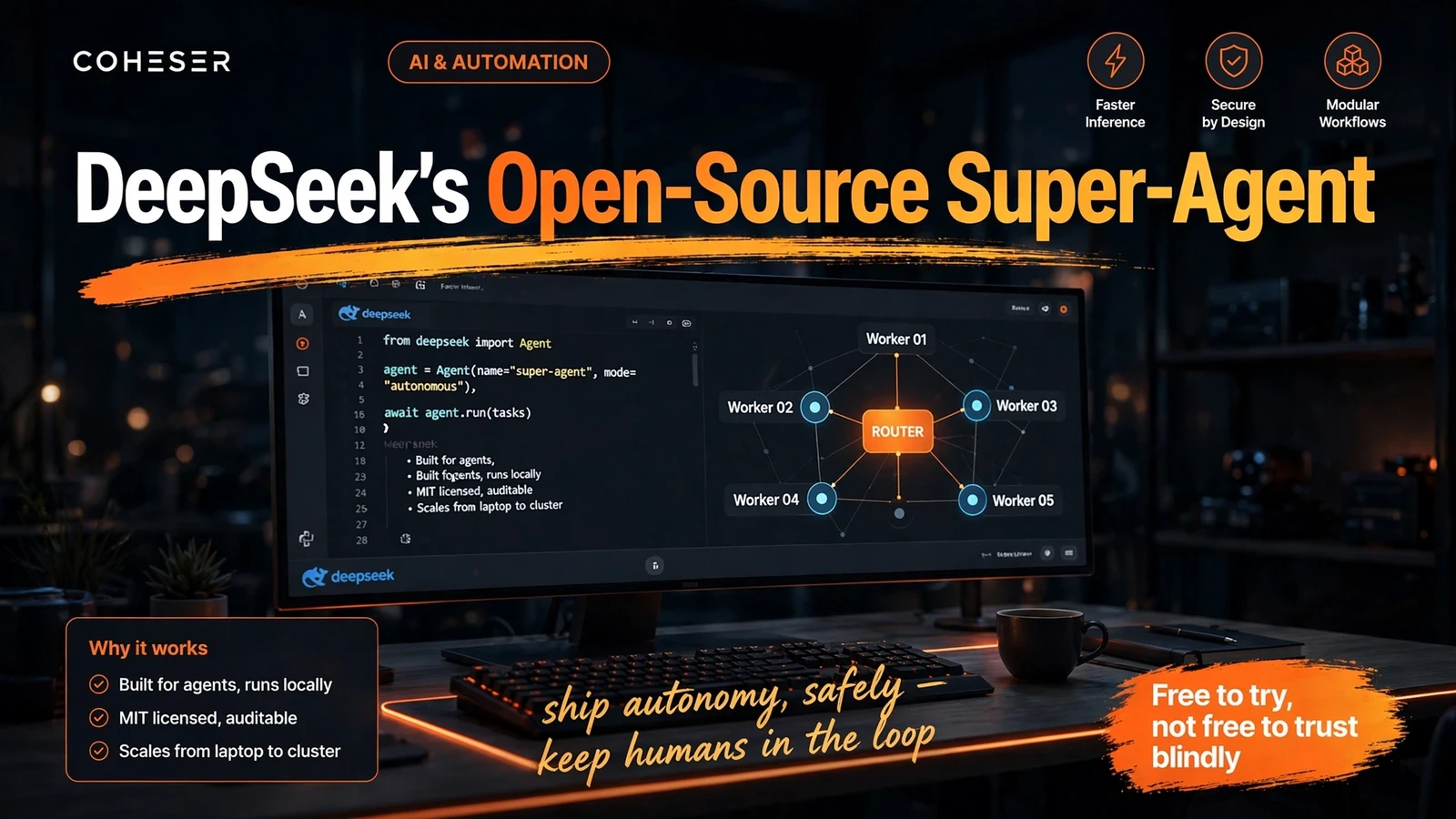
On 31 October 2026, DeepSeek's Harness team published dsh-superagent-prototype on GitHub under the MIT licence: a research prototype of a proactive coding agent for one GitHub repository. Free to download, run and inspect, it deserves a careful look before it touches your code. This post explains what it does, what it does not do, and how to pilot it.
In short: a Router assigns permitted requests from GitHub (and optionally Feishu chat) to isolated Worker sessions, each with its own session and directory, which return results — for example, a pull request — to the original conversation. Multiple issues can be worked in parallel. DeepSeek is explicit, though, that this is research code, not an official product, and not production-ready.
DeepSeek's Open-Source Super-Agent: Free Coding Help, With Caveats
What DeepSeek actually released
On 31 October 2026, DeepSeek's Harness team published dsh-superagent-prototype on GitHub under the MIT licence, as reported by Startup Fortune, AI Affairs, Medium and Zubiqo on 1 November 2026. It is built on DeepSeek Harness, the open-source, self-hostable agent framework released on 13 August 2026, also MIT-licensed. Harness installs via Node.js (npx @deepseek-ai/dsh web), serves a local interface at 127.0.0.1:3080, and uses composable plugins — adapters, tools, sessions, sandboxes, storage, agent loops, interfaces — on a runtime called Cordis.
The reaction was fast: reports cite roughly 2,046 stars and 172 forks at about 12.6 hours after release, rising to roughly 4,117 stars by about 07:20 UTC on 1 November. Treat those as reported figures, not live counts, but developers clearly want open coding-agent infrastructure they can run.
Research code, not a product
DeepSeek's own framing matters more than the star count: the prototype is research and reference code, not an official product, and not production-ready. Some ideas in its accompanying Super-agent design article are not even implemented in the published code. Judge it as an architecture demonstration, not a tool to hand your repository to and walk away from.
How the super-agent works: a router, workers, and parallel issues
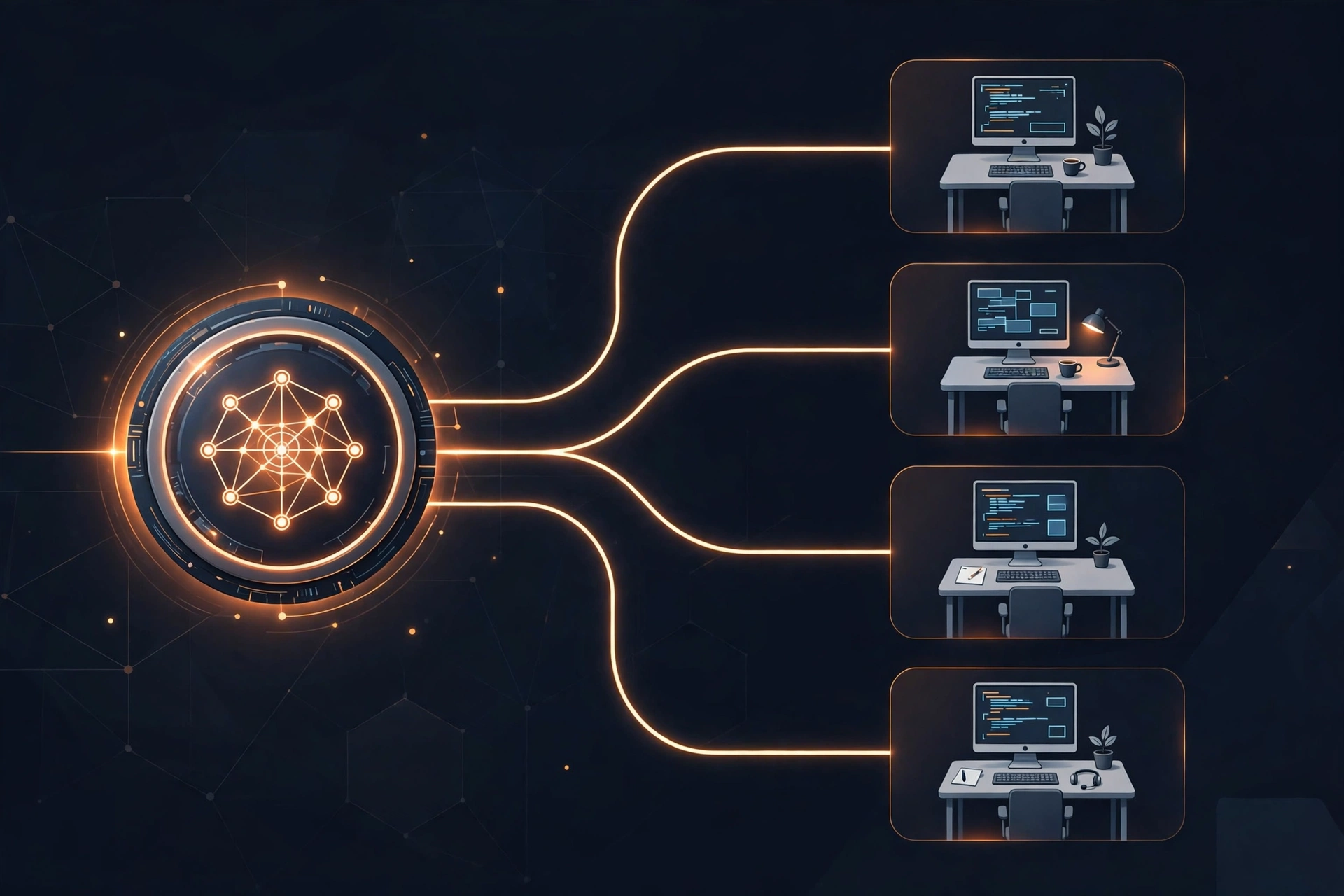
The design is straightforward. A Router receives permitted requests from GitHub — and optionally from Feishu chat — and assigns each to an isolated Worker session, with its own session and directory. The worker returns results to the original conversation, for example as a pull request. Because workers are isolated, multiple issues can be worked in parallel — the headline benefit, and a multiplied risk: every worker touches your code autonomously, so review burden grows with worker count. "Proactive" means the agent works towards a deliverable, not just answers questions.
Why developers are excited
Three things explain the enthusiasm: genuinely open code you can read, fork and modify on a self-hostable framework; zero licence cost to try; and a legible architecture — router, workers, sessions, directories — understandable without trusting a black box. Most capable coding agents are paid services with proprietary internals, so it lets teams learn how multi-agent coding works and decide what to build or buy with evidence. For teams exploring AI agents or AI automation, that learning alone can justify a careful pilot. One caution: open source shifts responsibility, it does not remove it — with research code, you vet the code, configure the sandbox and review every change, with no support desk.
The caveats you must not skip
The reports carry safety warnings to treat as requirements. Worker sessions run commands without approval as the operator's operating-system user. Harness is experimental preview software without a security audit. A critical sandbox-escape flaw, CVE-2026-82533, was fixed in version 0.1.2-alpha.1 — so use only current releases.
- Use only current Harness releases — never a version predating the CVE-2026-82533 fix.
- Never expose the local control port beyond your machine; the local UI is for localhost, not the open internet.
- Run with minimal privileges, so a misbehaving worker cannot reach more than it needs.
- Review plugins and generated commands where possible, and every pull request as if a stranger wrote it.
None of this makes the prototype unusable — it makes it a laboratory instrument, not a production employee. In a sandbox with a disposable repository and human review, these risks are manageable; pointed at production with broad permissions, they are not.
Free to try, expensive to trust: how it compares with paid coding agents
Paid agents such as GitHub Copilot and Claude Code trade control for convenience: a subscription buys a polished product, vendor support, managed updates and safety defaults. The prototype inverts that bargain — full control and zero licence cost, but you supply the safety engineering, operational care and judgement yourself.
A disciplined team with a sandboxing plan can learn much from the prototype cheaply. A team wanting a day-one tool with vendor support and predictable behaviour will usually be better served by a paid agent until open prototypes mature. Neither choice is wrong; pretending the prototype is already the polished product is.
A simple comparison
- Licence cost: prototype free (MIT); paid agents subscription-based.
- Control: prototype full — you host, read and change it; paid agents limited to vendor settings.
- Convenience: paid agents win — install, sign in, start working.
- Support and safety: paid agents offer vendor support and audited defaults; the prototype offers neither.
- Parallel work: the prototype's router-and-workers design is built for it; paid agents vary by plan.
If you already use a paid agent, treat the prototype as a research complement: run it on non-critical work and compare pull-request quality. Our guides on GitHub Copilot and coding agents apply the same discipline: measure on your own work first.
The smart move: a sandboxed pilot with human review on every change
Open-source coding agents are cheap to try but expensive to trust. The smart move is a sandboxed pilot with human review on every change — not handing a prototype the keys to production.
A practical pilot checklist
- Use a disposable repository with no secrets, customer data or production credentials.
- Run the current Harness release only, with minimal privileges, control port bound to localhost.
- Start with one worker and a few well-scoped issues; add parallelism once review keeps pace.
- Require human review for every pull request, with tests run before anything merges.
- Record what the agent gets right and wrong, and the reviewer time each change costs — that is your real price.
- Decide in advance what success looks like, and when to stop.
This is the discipline we recommend for any custom software development project introducing a new tool: small blast radius, clear success criteria, a human in the loop until trust is earned — whether the goal is SaaS, Flutter or MERN.
What this means for your business
For most businesses, the prototype is not something to deploy this week. It signals where coding assistance is heading: open, multi-agent systems working issues in parallel. The first beneficiaries will learn the architecture now, in a sandbox, keeping production work on proven tools.
Businesses in the United Kingdom, the USA, the UAE, Saudi Arabia and Pakistan face different expectations, so settle pilot governance — where code goes, who approves changes, what is logged — before it starts. If you need help designing that pilot, talk to Coheser. For early coverage, see Startup Fortune's report and the AI Affairs coverage; verify the repository on GitHub before installing anything.
Frequently asked questions
Is DeepSeek's super-agent prototype an official DeepSeek product?
No. DeepSeek is explicit: dsh-superagent-prototype is research and reference code, not an official product, and not production-ready. Treat it as an architecture demonstration, not a supported tool.
Is it safe to run the prototype on my production repository?
No — not in its current form. Workers run commands without approval as the operator's OS user, Harness is unaudited preview software, and a critical sandbox-escape flaw was only recently fixed. Pilot it in a sandbox, with current releases, minimal privileges and human review on every change.
How much does the super-agent prototype cost?
The code is free under the MIT licence and Harness is self-hostable, so there is no licence or subscription fee. The real costs are your time: setup, sandboxing, review and infrastructure. Budget for reviewer hours, not just compute.
Should my team replace GitHub Copilot or Claude Code with it?
Not yet, for most teams. Paid agents offer polish, support and safety defaults the prototype lacks. Run a sandboxed pilot alongside your existing tools, compare pull-request quality and reviewer effort, and let that evidence decide.